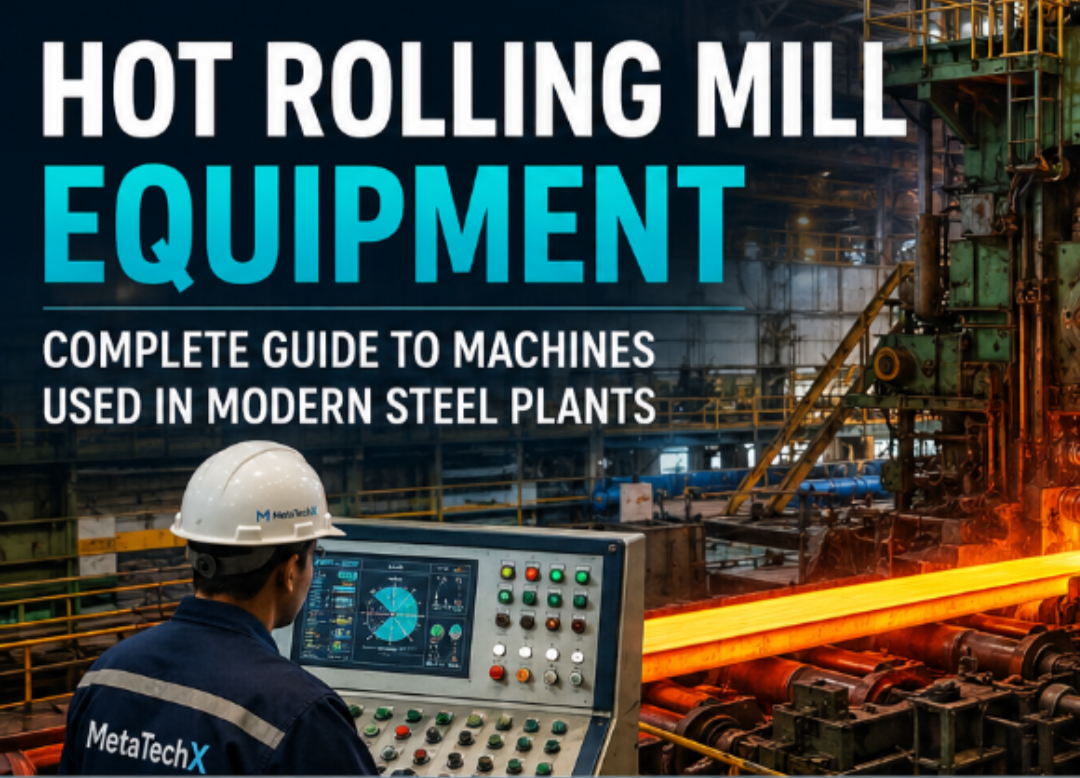
Hot rolling mills are among the most important production systems in the steel industry. They transform heated steel slabs, billets, blooms, or billets into finished products such as plates, coils, strips, bars, and structural sections.
A modern hot rolling mill is not a single machine. It is an integrated production line consisting of heating equipment, descaling systems, rolling stands, drive systems, cooling systems, shears, finishing equipment, coilers, conveyors, hydraulic systems, lubrication systems, electrical systems, and automation controls.
Understanding each piece of equipment is essential for steel plant operators, mechanical maintenance engineers, electrical engineers, automation professionals, and production teams.
This guide explains the major equipment used in modern hot rolling mills, their functions, operating principles, and important maintenance considerations.
What Is a Hot Rolling Mill?
A hot rolling mill is a steel-processing plant where steel is heated above its recrystallization temperature and then passed through one or more rolling stands to reduce thickness or change its cross-sectional shape.
Depending on the product, hot rolling mills may produce:
- Hot rolled coils
- Steel plates
- Flats
- Bars
- Wire rods
- Angles
- Channels
- Beams
- Structural sections
- Rails
- Other specialized steel products
The basic process can be represented as:
Raw Material → Reheating → Descaling → Roughing → Intermediate Rolling → Finishing → Cooling → Cutting/Coiling → Inspection → Dispatch
Major Equipment Used in a Hot Rolling Mill
A modern hot rolling mill generally contains the following major equipment:
- Reheating Furnace
- Furnace Charging and Discharging System
- Descaling System
- Roughing Mill
- Intermediate Mill
- Finishing Mill
- Rolling Mill Drives
- Work Rolls and Backup Rolls
- Roll Chocks and Bearings
- Hydraulic Gap Control System
- Loopers and Tension Control Equipment
- Flying Shear
- Crop Shear
- Cooling System
- Runout Table
- Pinch Rolls
- Coiler
- Coil Handling System
- Conveyors
- Hydraulic Power Units
- Lubrication Systems
- Cooling-Water Systems
- Electrical Control Systems
- PLC and Automation Systems
- Instrumentation and Sensors
- Level-2 Process Automation
- Fume and Scale Handling Systems
Let's examine these systems one by one.
1. Reheating Furnace
The reheating furnace is normally one of the first major process units in a hot rolling mill.
Its primary function is to heat the steel stock to the required rolling temperature before it enters the rolling mill.
Depending on the mill design, furnaces may use:
- Natural gas
- Coke oven gas
- Mixed gas
- Oil
- Other industrial fuels
Common furnace types include:
- Walking beam furnace
- Walking hearth furnace
- Pusher furnace
Main furnace components
A reheating furnace may include:
- Burners
- Combustion air fans
- Recuperator
- Furnace zones
- Furnace roof
- Furnace walls
- Walking beams
- Water-cooled skids
- Charging system
- Discharging system
- Temperature sensors
- Pressure-control system
- Fuel-control valves
- Combustion-control system
Important operating parameters
Operators normally monitor:
- Furnace temperature
- Steel temperature
- Furnace pressure
- Fuel flow
- Combustion air flow
- Oxygen level
- Furnace atmosphere
- Heating time
Poor furnace operation can result in excessive scale formation, uneven heating, fuel consumption, and rolling defects.
2. Charging and Discharging Equipment
Steel stock must be transferred into and out of the reheating furnace safely and accurately.
Depending on the furnace design, equipment may include:
- Charging machines
- Pusher systems
- Walking beams
- Walking hearth mechanisms
- Extractors
- Discharge rollers
- Transfer tables
Reliable material handling is important because improper charging can cause furnace delays, material collisions, and production losses.
3. High-Pressure Descaling System
When steel is heated, oxidation produces a layer of scale on the surface.
High-pressure water is used to remove this scale before rolling.
A typical descaling system consists of:
- High-pressure pumps
- Descaling headers
- Spray nozzles
- Valves
- Accumulators
- Filters
- Water tanks
- Pressure instrumentation
High-pressure water jets break and remove the oxide scale from the steel surface.
Common problems
- Nozzle blockage
- Low water pressure
- Pump failure
- Valve malfunction
- Uneven spray pattern
- Poor water quality
Effective descaling is important for achieving good surface quality.
4. Roughing Mill
The roughing mill performs the initial major reduction in thickness or cross-sectional dimensions.
A roughing mill can consist of one or more rolling stands.
Its major functions include:
- Thickness reduction
- Width reduction
- Shape control
- Preparing material for finishing
The roughing mill requires high rolling torque because the steel is still relatively thick.
5. Intermediate Rolling Mill
After roughing, the material may pass through intermediate rolling stands.
These stands progressively reduce the material dimensions before it reaches the finishing mill.
Important parameters include:
- Roll gap
- Rolling speed
- Rolling force
- Rolling torque
- Strip tension
- Temperature
- Material width
- Thickness
Proper coordination between stands is essential for stable rolling.
6. Finishing Mill
The finishing mill is responsible for achieving the final thickness, width, shape, and surface quality required for the product.
A finishing train may contain several closely spaced rolling stands.
Each stand typically consists of:
- Work rolls
- Backup rolls
- Chocks
- Bearings
- Hydraulic adjustment system
- Drive motor
- Gearbox or spindle arrangement
- Cooling system
- Measurement instruments
Modern finishing mills use sophisticated automatic gauge control and tension-control systems.
7. Work Rolls and Backup Rolls
Rolls are among the most critical components of a rolling mill.
Work Rolls
Work rolls directly contact the hot steel.
They determine:
- Thickness
- Surface finish
- Shape
- Profile
Backup Rolls
Backup rolls support the work rolls and reduce roll deflection under heavy rolling forces.
Roll condition has a direct effect on product quality.
Common roll-related problems include:
- Roll wear
- Thermal cracks
- Mechanical damage
- Improper grinding
- Surface defects
- Excessive roll bending
8. Roll Chocks and Bearings
Roll chocks support the rolling rolls and transfer forces to the mill housing.
Bearings allow the rolls to rotate with minimum friction.
Common bearing arrangements include:
- Roller bearings
- Oil-film bearings
- Specialized high-load rolling-mill bearings
Proper lubrication and alignment are essential for bearing life.
9. Rolling Mill Drive System
The drive system supplies the torque required to rotate the rolls.
A typical drive train may include:
Electric Motor → Coupling → Gearbox → Spindle → Roll
Modern mills commonly use high-power AC motors with variable-speed drives.
Important parameters include:
- Motor current
- Motor speed
- Torque
- Drive temperature
- Vibration
- Power consumption
Drive failures can result in major production interruptions.
10. Hydraulic Gap Control System
Modern rolling mills use hydraulic systems for precise roll-gap adjustment.
The system can control:
- Roll position
- Rolling force
- Thickness
- Automatic gauge control
- Roll bending
Typical components include:
- Hydraulic cylinders
- Servo valves
- Hydraulic pumps
- Accumulators
- Pressure sensors
- Position sensors
- Filters
- Hydraulic power units
Hydraulic contamination is a major cause of servo-valve and system failures.
11. Loopers and Tension Control
In continuous strip mills, loopers help maintain proper strip tension between rolling stands.
They compensate for differences in material speed and help stabilize rolling.
Poor tension control can cause:
- Strip instability
- Thickness variation
- Cobble formation
- Shape problems
- Strip breakage
12. Shearing Equipment
Hot rolling mills use different types of shears depending on the product and process.
Crop Shear
Crop shears remove the front and rear ends of the material.
Flying Shear
A flying shear can cut moving material without completely stopping the production line.
Shears are important for:
- Cutting
- Cropping
- Dividing
- Sample preparation
- Product-length control
13. Runout Table
After the finishing mill, hot strip travels across the runout table.
The runout table typically contains:
- Roller tables
- Water headers
- Spray nozzles
- Valves
- Temperature sensors
- Drive motors
The major purpose is to transport and cool the hot strip.
14. Laminar Cooling System
Controlled cooling is critical for achieving the required metallurgical properties.
Water is sprayed onto the strip through cooling headers.
Cooling parameters can include:
- Water flow
- Water pressure
- Cooling-zone length
- Strip temperature
- Cooling rate
- Header selection
Incorrect cooling can affect:
- Yield strength
- Tensile strength
- Hardness
- Microstructure
- Flatness
- Product quality
15. Pinch Rolls
Pinch rolls control and guide the strip before it enters the coiler.
They provide:
- Strip guidance
- Speed synchronization
- Tension control
- Stable entry into the coiler
Roll surface condition and alignment are important for avoiding strip marks.
16. Coiler
In a hot strip mill, the coiler converts the continuously rolled strip into a coil.
Major coiler components include:
- Mandrel
- Wrapper rolls
- Pinch rolls
- Gearbox
- Hydraulic system
- Drive motor
- Coil car
- Coil transfer equipment
The coiler must operate in synchronization with the finishing mill.
17. Coil Handling System
Once the coil is formed, it must be transported safely.
Typical equipment includes:
- Coil car
- Coil transfer system
- Coil storage area
- Coil handling cranes
- Coil conveyors
- Coil tilters
Automation helps identify, track, and route coils according to production requirements.
18. Hydraulic Power Unit
Hydraulic systems are widely used throughout a modern rolling mill.
Hydraulic systems may operate:
- Roll-gap adjustment
- Shears
- Coiler mechanisms
- Coil cars
- Guides
- Clamping systems
- Roll bending
- Other actuators
A hydraulic power unit generally contains:
- Hydraulic pumps
- Motors
- Oil tank
- Filters
- Valves
- Accumulators
- Pressure instruments
- Cooling system
19. Lubrication System
Lubrication is essential for bearings, gearboxes, spindles, and other rotating equipment.
Typical systems include:
- Centralized lubrication
- Oil circulation systems
- Grease systems
- Gearbox lubrication
- Oil-mist systems
Important parameters include:
- Oil pressure
- Oil temperature
- Oil level
- Oil cleanliness
- Flow rate
20. Cooling-Water System
Hot rolling mills consume large quantities of water.
Water may be required for:
- Roll cooling
- Descaling
- Strip cooling
- Equipment cooling
- Furnace systems
- Hydraulic oil cooling
Water-treatment and filtration systems are therefore essential.
21. Electrical Equipment
The electrical system is the backbone of the rolling mill.
Major electrical equipment includes:
- Transformers
- MCCs
- Switchgear
- Circuit breakers
- Variable-frequency drives
- Motors
- PLC panels
- Control panels
- UPS systems
- Sensors
- Encoders
- Power-factor equipment
High-power rolling-mill drives require sophisticated electrical protection and control.
22. PLC and Automation System
Modern hot rolling mills depend heavily on automation.
PLC systems control equipment such as:
- Motors
- Valves
- Hydraulic systems
- Shears
- Cooling systems
- Conveyors
- Furnace systems
Automation systems collect signals from sensors and execute programmed control logic.
Typical field devices include:
- Proximity sensors
- Photoelectric sensors
- Pressure transmitters
- Temperature sensors
- Flow meters
- Encoders
- Position sensors
- Load cells
23. Automatic Gauge Control
Automatic Gauge Control, commonly known as AGC, helps maintain the required strip thickness.
The control system continuously monitors thickness and adjusts the rolling gap or other process parameters.
AGC can significantly improve:
- Thickness accuracy
- Product consistency
- Mill stability
- Production quality
24. Level-2 Process Automation
Large modern rolling mills may use Level-2 automation for process optimization.
The system can calculate and control:
- Rolling schedules
- Pass schedules
- Roll gaps
- Rolling speeds
- Tension
- Temperature
- Cooling patterns
- Product tracking
It can also communicate with higher-level production-management systems.
25. Instrumentation and Sensors
Accurate measurement is essential for modern steel production.
Common measurements include:
- Temperature
- Pressure
- Flow
- Thickness
- Width
- Speed
- Position
- Force
- Torque
- Vibration
Examples of instruments include:
- Pyrometers
- Pressure transmitters
- Flow meters
- Load cells
- Encoders
- Laser measurement systems
- Thickness gauges
26. Scale Handling System
During reheating and rolling, significant quantities of oxide scale are generated.
Scale-handling systems may include:
- Scale pits
- Flushing systems
- Pumps
- Screens
- Scrapers
- Conveyors
- Sludge-handling equipment
Efficient scale removal prevents accumulation and equipment problems.
27. Common Hot Rolling Mill Failures
Some common equipment failures include:
Mechanical failures
- Bearing failure
- Gearbox failure
- Coupling damage
- Roll damage
- Spindle failure
- Conveyor breakdown
- Hydraulic leakage
Electrical failures
- Motor overheating
- Drive trips
- Insulation failure
- Cable faults
- Transformer problems
- Breaker trips
Automation failures
- Sensor failure
- Encoder failure
- PLC communication loss
- I/O module failure
- Instrument calibration problems
Hydraulic failures
- Oil contamination
- Pump failure
- Servo-valve malfunction
- Leakage
- Low pressure
- Accumulator problems
Preventive Maintenance in Hot Rolling Mills
Preventive maintenance should cover all major systems.
Mechanical
Inspect:
- Bearings
- Rolls
- Gearboxes
- Couplings
- Spindles
- Roll chocks
- Conveyors
Electrical
Check:
- Motors
- Drives
- Transformers
- Switchgear
- Cables
- Electrical panels
- Earthing
Hydraulic
Check:
- Oil cleanliness
- Filters
- Pumps
- Valves
- Cylinders
- Pressure
- Leakage
Automation
Check:
- Sensors
- Encoders
- PLCs
- Communication networks
- Instrument calibration
- Control logic
A well-designed preventive and predictive maintenance program can reduce unplanned downtime and improve equipment reliability.
Why Hot Rolling Mill Equipment Knowledge Matters
A steel plant is an interconnected system. A failure in one piece of equipment can affect the entire production line.
For example:
Reheating Furnace Problem → Rolling Delay → Temperature Loss → Rolling Instability → Production Loss
Similarly:
Drive Failure → Mill Stand Stops → Strip Accumulation → Cobble Risk → Production Downtime
Therefore, engineers and technicians need both equipment-specific knowledge and process-level understanding.
Skills Required for Hot Rolling Mill Professionals
Professionals working in hot rolling mills should understand:
- Rolling process
- Mill equipment
- Mechanical maintenance
- Electrical systems
- PLC and automation
- Hydraulic systems
- Lubrication
- Cooling systems
- Instrumentation
- Process control
- Safety
- Troubleshooting
- Preventive maintenance
- Predictive maintenance
Practical knowledge of these areas can significantly improve plant reliability and professional performance.
Frequently Asked Questions
What is the main equipment in a hot rolling mill?
Major equipment includes the reheating furnace, descaler, roughing mill, finishing mill, cooling system, shears, pinch rolls, coiler, conveyors, hydraulic systems, electrical drives, and automation systems.
What is the function of a roughing mill?
The roughing mill performs the initial major reduction in thickness or cross-sectional dimensions before the material enters the finishing stages.
What is the purpose of a finishing mill?
The finishing mill achieves the final required thickness, width, shape, surface quality, and dimensional accuracy.
Why is descaling required?
Descaling removes oxide scale from the steel surface before or during rolling, helping improve surface quality and rolling performance.
What does AGC mean in a rolling mill?
AGC means Automatic Gauge Control. It helps maintain the required product thickness by automatically adjusting rolling conditions.
What is the function of the runout table?
The runout table transports the rolled strip and provides controlled cooling before the strip enters the coiling section.
Why are hydraulic systems important in rolling mills?
Hydraulic systems provide high-force, precise actuation for applications such as roll-gap adjustment, roll bending, shears, guides, and coiler mechanisms.
Build Your Steel Industry Skills with MetaTechX
Knowing the names of steel plant equipment is only the beginning.
Professionals working in steel plants need to understand how equipment operates, how systems interact, how faults develop, and how problems can be diagnosed safely and efficiently.
MetaTechX GetCertified provides professional skill assessment designed around practical industrial knowledge.
Assess your skills in areas such as:
- Electrical & Automation
- Mill Equipment & Maintenance
- Steel Plant Operations
- Industrial Equipment
- Technical Troubleshooting
Assess your skills. Prove your knowledge. Get recognized.
Visit MetaTechX GetCertified to explore professional skill assessment opportunities.
Conclusion
A modern hot rolling mill is a highly integrated combination of mechanical, electrical, hydraulic, automation, instrumentation, and process-control systems.
From the reheating furnace to the final coiler, every machine contributes to production efficiency and product quality.
For steel industry professionals, understanding these systems is essential for effective operation, maintenance, troubleshooting, and continuous improvement.
The strongest professionals are not those who understand only one machine—they understand how the complete production system works together.
MetaTechX Technical Learning Series
Continue learning about steel plant technology with MetaTechX.
Explore topics covering:
Steel Making | Hot Rolling | Mill Equipment | Electrical | Automation | Maintenance | Operations | Industrial Skills
Follow MetaTechX for practical technical knowledge and professional skill development.
Above information are good information.i like to the meta techx technical information page